
Automotive Franchise
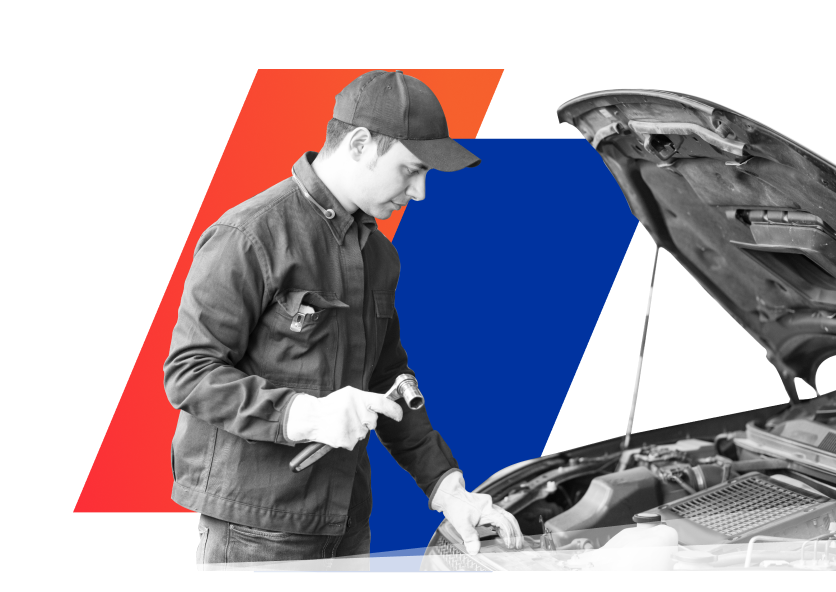
What is an automotive franchise?
An automotive franchise is a licensed vehicle-service business (repair, maintenance, tyres, glass, paint, detailing or restoration) run under an established brand’s name, systems and supplier agreements. You own and operate the location; the franchisor supplies the brand, training, technical support and buying power. It is distinct from a car dealership, which sells vehicles and is governed by an entirely different set of manufacturer agreements and capital requirements.
Automotive service is one of the more durable categories in franchising for a simple reason: vehicles need maintenance whether or not the economy is strong. The average vehicle on the road keeps getting older, and older vehicles need more repair, not less. Cars also keep getting more complex (sensors, driver-assist systems, hybrid and EV drivetrains), which pushes work toward shops with proper diagnostic equipment and trained technicians, and away from home garages.
How much does it cost to open an automotive franchise?
Investment in this category spans a very wide band, from roughly $70,000 for a mobile, van-based format to $2 million or more for a multi-bay service centre. That spread is the most useful thing to understand before you start comparing opportunities, because it tells you the category contains genuinely different business models rather than one model at different prices.
Three formats account for most of the range:
- Mobile and van-based. No premises. You take the service to the customer, restoration, touch-up, mobile glass or detailing. Lowest entry cost, fastest to open, and the owner is usually in the van at the start.
- Small-footprint specialist. One service done well, window tint, paint touch-up, express autobody. Modest premises, less equipment, a narrower technician skill set to hire for.
- Full-service repair centre. Multi-bay premises, lifts, diagnostic equipment and a team of certified technicians. Highest investment, highest revenue ceiling, and by far the most operationally demanding.
What actually drives the variance is premises and equipment, not the licence. Bay count, lift and alignment equipment, diagnostic tooling, parts inventory and territory size move the number far more than the franchise fee does. Two brands can quote similar fees and differ by a factor of five in total investment. Read both figures, and ask specifically what is included in the build-out estimate and what is not.
What does an automotive franchise owner actually do all day?
Most automotive franchise owners spend their time on people and throughput, not on cars. This is the most common misconception among buyers drawn to the category because they love vehicles.
In a full-service format, the owner’s day is dominated by hiring and retaining certified technicians, managing bay utilisation, approving estimates, handling the few customer conversations that go sideways, and watching parts margin. Technician recruitment is the constraint that most often limits growth, not demand, and not marketing.
In a mobile or single-service model, the owner is far more likely to be performing the work personally in year one, then adding a second van or technician once the route is dense enough to justify it. That is a different life and a different risk profile: lower fixed cost, but the business depends on you being physically productive until you can replace yourself.
If your motivation is to work on cars yourself, be honest about which of those you actually want. Both are legitimate. They are not interchangeable.
Who is a good fit for auto care franchising?
The strongest candidates are usually managers and operators, not mechanics. Franchisors in this category consistently place people with service-business management, multi-unit retail, logistics or trades-supervision backgrounds, because the job is running a service operation with a technical product.
- Comfort hiring, training and retaining skilled technical staff in a tight labour market.
- Willingness to be visible locally, fleet accounts, insurers, dealerships and nearby businesses are a large share of steady revenue.
- Discipline around process, because the economics live in bay time, parts margin and repeat rate.
- Enough capital reserve to fund the ramp period without starving marketing.
You do not need to be a certified technician. Some brands prefer that you are not, on the grounds that owners who can do the work tend to do the work instead of building the business.
Pros and cons of owning a car service franchise
What works in this category:
- Non-discretionary demand. A failed alternator is not a purchase people postpone indefinitely. Demand is far less cyclical than most retail or hospitality.
- Repeat revenue. Vehicles need service on a schedule, so a satisfied customer is a multi-year relationship rather than a transaction.
- Two revenue lines. Labour and parts, which lets you protect total margin when one side is under pressure.
- Referral flow. Insurers, fleet managers and local businesses keep shortlists of shops they trust, and those relationships compound.
What makes it hard:
- Technician supply. The binding constraint in the whole category. Skilled technicians are scarce and expensive, and losing one hurts immediately.
- Equipment and premises cost. Full-service formats carry real capital intensity, and lifts and diagnostic tools date.
- Technology change. EV and hybrid work needs new training and new equipment, an opportunity for shops that invest early, a threat to those that do not.
- Trust is the product. Automotive service carries consumer scepticism the operator has to overcome locally, every day.
Is a car franchise the same as a car dealership?
No, and the distinction matters before you start comparing numbers. Searches for “car franchise” and “franchise automobile” return two completely different businesses.
A car dealership sells new vehicles under a manufacturer’s agreement. These are rarely available to first-time buyers, typically require several million in capital, and are awarded through the manufacturer rather than a franchise-development process.
An automotive service franchise (repair, maintenance, tyres, glass, tint, autobody, restoration) is what this category covers and what is realistically available to an individual buyer. When people search “auto franchise” or “car care franchise”, this is almost always what they actually want.
How do you evaluate automotive franchise brands?
Compare unit economics and support depth, not marketing. Once you have narrowed to two or three, these are the questions that separate them:
- What does a mature unit earn, and how many reach it? Ask for Item 19 of the Franchise Disclosure Document, then ask how many franchisees are at or above the figure quoted.
- How long is the ramp? Months to breakeven determines how much working capital you actually need, often more than the investment estimate suggests.
- Who recruits and trains the technicians? In this category that answer predicts your first two years more than anything else.
- How is territory defined? Population, drive time, or vehicle registrations, and what stops the franchisor placing another unit beside you.
- What is the equipment refresh cycle, and who pays for EV and diagnostic upgrades?
- Can you speak to franchisees who are struggling, not only the reference list? The validation calls that matter are the ones the franchisor did not arrange.
How do people finance an automotive franchise?
Most buyers combine personal capital with an SBA-backed loan. Lenders in this category will expect meaningful liquid capital of your own before they lend, and the equipment-heavy formats generally require more of it than mobile ones.
Common routes include SBA 7(a) loans, well established for franchise purchases; equipment financing, which is straightforward here because lifts and diagnostic equipment serve as collateral; and retirement rollover structures (ROBS) for buyers funding from a 401(k) without early-withdrawal penalties. A FranNet consultant can walk you through which fits your position, and, just as importantly, tell you when a deal is too thin to finance safely.
Frequently asked questions about automotive franchises
Are automotive franchises profitable?
Profitability varies widely by format and market, and any franchisor quoting a single number should be treated with caution. The category has two structural advantages, non-discretionary demand and repeat customers, and one structural cost, skilled labour. Ask for Item 19 of the FDD and validate it with existing franchisees.
Do I need automotive experience to own one?
No. Most brands prefer strong operators and managers, and several explicitly do not require technical certification. You will need to hire and retain people who have it.
What is the cheapest way into an automotive franchise?
Mobile and van-based models, which carry no premises cost and open fastest.
How long does it take to open?
Mobile formats can open within a few months of signing. Full-service repair centres take considerably longer because of site selection, lease negotiation, build-out and equipment installation, the property is usually the long pole.
Does FranNet charge me to help?
No. FranNet’s guidance is free to you, consultants are compensated by the franchisor when a placement is made, so there is no cost and no obligation to explore the category properly.
Explore automotive franchise opportunities with a local consultant
Comparing automotive franchises well means comparing unit economics, territory terms and technician support, not brochures. A FranNet consultant knows which brands in this category are genuinely awarding territories in your market, which have realistic ramp expectations, and which are a poor fit for a first-time owner. It is free, and there is no obligation.
You can also browse the full franchise directory, take the franchise ownership assessment, or look at related categories such as home services and commercial cleaning if a service business appeals but vehicles are not the draw.
Featured Automotive brands
FranNet Verified Brand

FranNet Verified Brand

FranNet Verified Brand
FranNet Verified Brand
FranNet Verified Brand
FranNet Verified Brand
Explore automotive franchise opportunities
Tell us what you’re looking for and a local FranNet consultant will follow up. Free, no obligation.
Not sure which brand fits?
A local FranNet consultant can match you with the right automotive franchise. Free, no obligation.